

Lempuyang Temple Bali With Kids: Honest Guide to the Gate of Heaven
Few places in Bali create as much anticipation as Lempuyang Temple, better known as the Gate of Heaven. The photos suggest silence, reflection, and a moment suspended above the clouds. The reality is more layered and far more dependent on timing, expectations, and preparation.
We’ve visited Lempuyang Temple without chasing the perfect shot, and that changed everything. This guide strips away the hype and focuses on what actually matters: how the Gate of Heaven experience really works, how long the wait can be, when it’s worth going, and when it might not be.
Whether you’re traveling solo, as a couple, or with kids, this article will help you decide if Lempuyang Temple belongs on your Bali itinerary and how to experience it without disappointment.
This post may contain affiliate links. I may earn a small commission at no extra cost to you. – disclaimer.
Quick Guide: Lempuyang Temple at a Glance
If you’re short on time or just want the essentials before deciding whether to go, this is what you need to know.
- Location of the Lempuyang Temple: East Bali (Karangasem), about 2 to 2.5 hours from Ubud
Here is the location google Pin - Famous for: The “Gate of Heaven” instagram photo with the volcano Mount Agung in the background
- Entrance fee: 70K for the photo per person, 50K for the shuttle up the mountain + parking and 20K IDR if you want a scooter for the last bit up
- Opening hours: Early morning to early evening, but queues start forming before sunrise
- Average waiting time for photos: 1 to 6 hours, depending on season and time of day
- Best time to visit: Very early morning or late afternoon, away from the high season.
- Dress code: Sarong required, shoulders covered, can rent on site
- Physical difficulty: Moderate to Hard. You can taxi (scooter) the steep slope up after the bus takes you to the temple area
- Suitable for kids: Hmm, depending on your kids, expectations and if they really want it themselves, or it’s just you wanting it. If it’s the latter, then a definite NO is in place here.
- Is it worth it? Depends on expectations, timing, and how you approach the visit
- Best to combine with? Visiting beautiful Amed.
This guide goes beyond the basics. Below, we’ll walk you through what the experience is really like, how the famous photo works, how to avoid common mistakes, and whether Lempuyang Temple is worth it in your Bali itinerary at all.
History of Lempuyang Temple
Lempuyang Temple, also known as Pura Lempuyang Luhur, is often introduced as one of Bali’s oldest temples, but that line alone doesn’t really explain why it matters. Long before the Gate of Heaven became a global photo spot, this was a place people came to for spiritual reasons, not visuals.
What many visitors don’t realize is that Lempuyang isn’t just one temple. It’s a series of temples spread up the mountain, connected by a long, demanding climb. Traditionally, pilgrims move upward through these temples as part of a spiritual journey. The effort is intentional. The higher you go, the more it becomes about commitment rather than convenience.

The famous Gate of Heaven sits at the very bottom of this journey, which explains why it’s the most visited part today. In Balinese Hindu belief, these split gates mark a transition. Not heaven itself, but the space between worlds. A reminder of balance, humility, and respect. Standing there, that meaning feels very different from what you see online.
When we learned this on site, it shifted how we looked at the place. Watching people queue patiently for a photo, it became obvious how disconnected the modern experience can be from the original purpose. Knowing the history didn’t make the visit more “serious”, but it did make it more grounded. It stopped feeling like just another attraction and more like a place we were briefly passing through, rather than consuming.
The Gate of Heaven: Instagram vs Reality
The image everyone associates with Lempuyang Temple is the one where you appear to be standing above the clouds, framed perfectly by the split gate, with Mount Agung rising in the background and a mirror-like reflection beneath your feet. It looks quiet. Almost spiritual. And that’s exactly why expectations often don’t match reality.
The first thing to know is this: there is no water beneath the gate. The reflection is created using a simple mirror held under the camera lens by a staff member. It’s not a secret, but it’s also something many visitors only realize once they’re already waiting in line. For some, that moment brings disappointment. For others, it’s simply part of the experience.
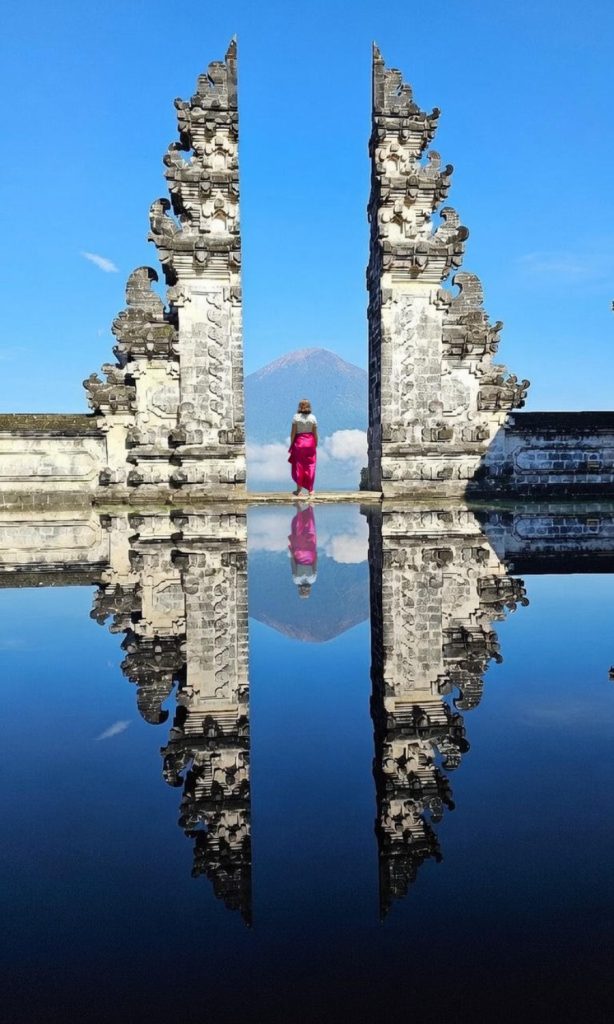
The second reality check is the queue. The Gate of Heaven photo operates on a strict rotation system. Visitors line up, one group at a time, and each person is given a short window to take photos before moving on. On busy days, this wait can stretch well beyond 3 hours. The process is calm and organized, but it’s far from spontaneous.
What surprised us most wasn’t the system itself, but how emotionally invested people were by the time they reached the front. After waking up early, driving for hours, and standing in line, that single photo starts to carry a lot of weight. If the clouds roll in, Mount Agung disappears, or the light isn’t quite right, it can feel anticlimactic, even though nothing actually went wrong.
Standing there, it becomes clear that the Gate of Heaven experience is less about the place and more about expectations. When you arrive understanding how the photo works and what the atmosphere is really like, it’s much easier to enjoy the moment for what it is. When you arrive expecting silence, solitude, and something mystical straight out of social media, disappointment is almost guaranteed.
How Long Is the Wait?
Waiting time is the single biggest factor that shapes the experience at Lempuyang Temple. It’s also the detail most people underestimate until they’re already standing in line.
On busy days, the wait for a photo at the Gate of Heaven typically ranges from 2 to 3 hours. During peak season, it can stretch even longer. The system itself is organized and calm, but there’s no getting around the fact that this is a slow-moving queue, especially once tour groups arrive.
When we were there, the wait wasn’t chaotic, but it was mentally tiring. You’re standing in the open, often in the heat, (there is a large covered waiting area) watching the clouds move and hoping Mount Agung stays visible by the time it’s your turn. That anticipation builds quickly, and the longer the wait, the more pressure people put on that one photo.

What made the biggest difference for us wasn’t just the time of day, but knowing in advance that waiting was part of the experience. Once you accept that the Gate of Heaven is not a quick stop, the frustration fades and the visit becomes much easier to enjoy.
Key Tip with Kids: Bring some games with you, a card game, food, and drinks (there are some small stalls). Make sure you prepare them for a wait of 2 to 3 hours, and if they still want to go, the experience will be much smoother.
Best Time to Visit Lempuyang Temple (Light, Crowds, and Reality)
Timing makes or breaks a visit to Lempuyang Temple. The difference between a calm, rewarding experience and a frustrating one often comes down to when you arrive, not what you expect to see.
Early Morning: The Most Popular for a Reason
Arriving early is the most common advice, and for good reason. The air is cooler, crowds are thinner, and there’s a better chance of seeing Mount Agung before clouds roll in. That said, “early” really does mean early. By mid-morning, tour buses begin arriving, and waiting times increase quickly.
From our experience, mornings feel more manageable, but they also come with higher expectations. When everything lines up, light, weather, and visibility, it’s easy to see why people love it. When it doesn’t, disappointment tends to hit harder after such an early start.
Midday: Usually the Worst Time
Late morning through early afternoon is the least forgiving window. Heat builds, queues slow down, and the chances of Mount Agung being fully visible drop significantly. This is also when most large tour groups are on-site, which adds to waiting times and overall noise.
If your schedule only allows for a midday visit, it’s worth adjusting expectations or considering alternatives nearby instead.

Late Afternoon: Quieter but Less Predictable
Late afternoon can be surprisingly calm. Many tour groups have already left, and the atmosphere feels more relaxed. The trade-off is visibility. Clouds often settle around Mount Agung later in the day, and lighting can be hit or miss.
We found afternoons easier from an energy perspective, especially if you’re not fixated on the “perfect” photo. If the gate is clear, it’s a bonus. If not, the visit still feels less rushed.
Seasonal Considerations
- Dry season (April to October): Better overall conditions, but heavier crowds
- Rainy season (November to March): Fewer visitors, shorter waits, but visibility is less reliable
The best time to visit Lempuyang Temple isn’t universal. It depends on whether you prioritize light, crowd levels, or overall comfort. Understanding that trade-off ahead of time makes the experience far more enjoyable.
To summarize the waiting times at Lempuyang Temple
When Waiting Times Are Longest
- Mid-morning (8:30–11:30 AM)
This is when most organized tours arrive from Ubud and South Bali. - High season and holidays
July, August, Xmas and school holiday periods see the longest queues. - Clear-weather days
Ironically, the best photo conditions also attract the most people.
When the Wait Is Shortest
- Very early morning
Arriving before sunset offers the best chance of a shorter queue. - Late afternoon
Fewer tour groups, but light and weather can be unpredictable. - Rainy or overcast days
Shorter waits, but Mount Agung will likely be hidden.
Lempuyang Temple Entrance Fee, Dress Code, and Opening Hours
Visiting Lempuyang Temple is often described as “free”, and that’s technically true, but there are a few separate costs that catch people off guard if they don’t know them in advance.
Entrance Fee (What You Actually Pay)
- Temple entrance: Free
- Gate of Heaven photo ticket: 70,000 IDR
- Shuttle bus from lower parking area (including parking): 50,000 IDR
- Scooter taxi for the final uphill section: 20,000 IDR
You don’t have to take the scooter taxi, but for many people it’s worth it, especially in the heat or after a long drive. The system is straightforward and well-organized, even if it feels a bit fragmented at first.
When we visited, everything was clearly explained on arrival. You choose what you need, pay locally, and move on. No pressure, no confusion, just a very Bali-style setup where different services are handled separately.

The Dress Code for Lempuyang Temple
Lempuyang Temple is a sacred site, so a sarong is mandatory for everyone. Shoulders should be covered, and clothing needs to be respectful. If you don’t have a sarong, one will be provided on site, as you see in the above image.
It helps to wear light, breathable clothes, especially if you’re waiting for pictures. It is also a good idea to wear comfortable shoes because paths might be uneven and slippery after it rains.
Opening Hours at Lempuyang Temple
The temple opens early in the morning, often before sunrise. There’s no strict closing time posted, but activity slows down by late afternoon.
From our experience, arriving early isn’t just about crowds; it’s about energy. It’s important to know ahead of time that visiting Lempuyang Temple will take time so you can arrange the remainder of your day more realistically.

How to Get to Lempuyang Temple
Getting to Lempuyang Temple is part of the experience, especially in East Bali, where distances are longer and the pace feels very different from the south of the island. How you get there has a real impact on how the visit feels.
From Ubud
From Ubud, the drive usually takes 2.5 to 3 hours, depending on traffic. The route passes through villages and greener landscapes, but the final stretch becomes narrower and slower.
If you’re coming from Ubud, a private driver is often the most relaxed option, especially if you plan to combine Lempuyang with other East Bali sights. It turns the day into more of a journey than a rush.
From Amed or East Bali (Our Preferred Base)
We love staying in Amed, and this is where visiting Lempuyang Temple feels easiest and most natural. From here, the ride takes about 45 minutes to an hour, making it a straightforward outing rather than a full-day commitment.
We almost always explore Bali by scooter, and this area is perfect for it. Renting from our go-to agency, Bikago, gives us the flexibility we value most. The big advantage of coming by scooter is that you can park much closer to the temple, skipping the shuttle bus entirely. That saves time, avoids extra steps, and keeps the visit feeling simple rather than over-managed.
The ride itself is peaceful and beautiful, especially in the morning. This is one of the most fun methods to get to Lempuyang Temple for people who are sure of themselves. Along the way you will have beautiful places, like the restaurant below looking over the rice fields and the mountains.

From South Bali (Canggu, Seminyak, Uluwatu)
From South Bali, expect a drive of 2.5 hours one way. This easily turns the visit into a full-day trip, especially if you plan to wait for photos.
If you’re based in the south, combining Lempuyang Temple with an overnight stay in East Bali or Amed often makes far more sense than doing it all in one day.
Scooter, Driver, or Tour?
- Scooter: Ideal from East Bali if you’re confident riding and want flexibility
- Private driver: Best for long distances and a relaxed pace
- Organized tour: Convenient, but fixed schedules can increase waiting time
For us, freedom matters more than speed. Being able to arrive when it feels right, park nearby, and leave without waiting for a group made the entire experience smoother.
Visiting Lempuyang Temple With Kids: What Actually Matters
Visiting Lempuyang Temple with kids is absolutely possible, but it works best when you plan for the part most people overlook: the waiting.
The good news is that there’s enough shade near the waiting area, so you’re not standing in direct sun the entire time. That makes a big difference, especially with younger kids. What really helps, though, is having something simple to pass the time.
We found that bringing a few small, lightweight activities changed the entire mood:
- A deck of cards for quick games
- A small travel game or puzzle
- A notebook and pen for drawing or journaling
- Simple word games or storytelling
- Downloaded content on a phone or tablet, used sparingly
Nothing fancy is needed. Even short games broken up by conversation worked well. The goal isn’t to eliminate waiting but to make it feel shared rather than frustrating.
Snacks and water are just as important. Waiting while hungry or thirsty is when patience disappears fastest. Having something familiar from home helps kids stay relaxed and grounded, especially in a new environment.
You can also walk around the temple area, and explore some other photo sites with a beautiful volcano backdrop.

What mattered most for us was removing pressure. We didn’t build the entire visit around getting the perfect photo. Seeing the gate, understanding its meaning, and experiencing the place together already made it worthwhile. The photo became a bonus, not the objective.
For families with teens, this is usually easier. Older kids understand the process, handle waiting better, and often enjoy having a bit of downtime to talk, play cards, or just observe what’s going on around them.
The honest takeaway is simple: if you treat Lempuyang Temple as a slow experience rather than a checklist stop, it becomes far more enjoyable with kids. A little preparation goes a long way here.
Is Lempuyang Temple Worth Visiting? An Honest Take
Whether Lempuyang Temple is worth visiting really depends on why you’re going and what you expect when you arrive. This isn’t a place that rewards rushing or rigid plans. It rewards patience, timing, and a bit of perspective.
When Lempuyang Temple Is Worth It
Lempuyang Temple makes sense if:
- You’re curious about its cultural and spiritual meaning, not just the photo
- You’re already exploring East Bali and don’t need to cross the island
- You’re comfortable with waiting and uncertainty around weather
- You’re happy to let the experience unfold without forcing a perfect outcome
Approached this way, the visit feels grounded. The gate, the setting, and the surrounding landscape come together naturally, and the photo becomes a small part of a larger experience.
When It Might Not Be Worth It
Lempuyang Temple can feel underwhelming if:
- You’re coming solely for the Instagram shot
- You’re short on time and dislike waiting
- You’re based in South Bali and doing this as a rushed day trip
- You expect quiet, solitude, or a deeply spiritual atmosphere at the gate
In those cases, the distance, waiting time, and unpredictability can outweigh the payoff.
Our Honest Take
For us, Lempuyang Temple was worth visiting because we didn’t make it about the photo. Understanding the history, accepting the waiting, and being present with what was actually happening made the experience feel meaningful rather than transactional.
That said, it’s not a must-see for everyone. Bali has countless places that offer beauty, calm, and connection without massive queues. Lots of them in the north of Bali.
Other Activities Near Lempuyang Temple, Bali
If visiting Lempuyang Temple feels like too much effort for one photo, or if you want to balance the day with something calmer, there are several excellent alternatives that often feel more relaxed and just as memorable.
Lahangan Sweet Viewpoint
Lahangan Sweet is one of the most popular alternatives to the Gate of Heaven, mainly because of its open views toward Mount Agung. While it has gained popularity recently, it still feels less structured and less pressured than Lempuyang.
When we visited, the experience felt lighter. There’s room to move, space to linger, and far less emotional weight attached to a single moment. It works especially well if you’re traveling with kids or simply want to enjoy the view without committing hours to waiting.
Handara Gate (Similar Look, Shorter Wait)
Handara Gate is often compared to the Gate of Heaven because of its tall split gates and misty mountain backdrop. There is also a queue, but it’s typically much shorter and more predictable than at Lempuyang.
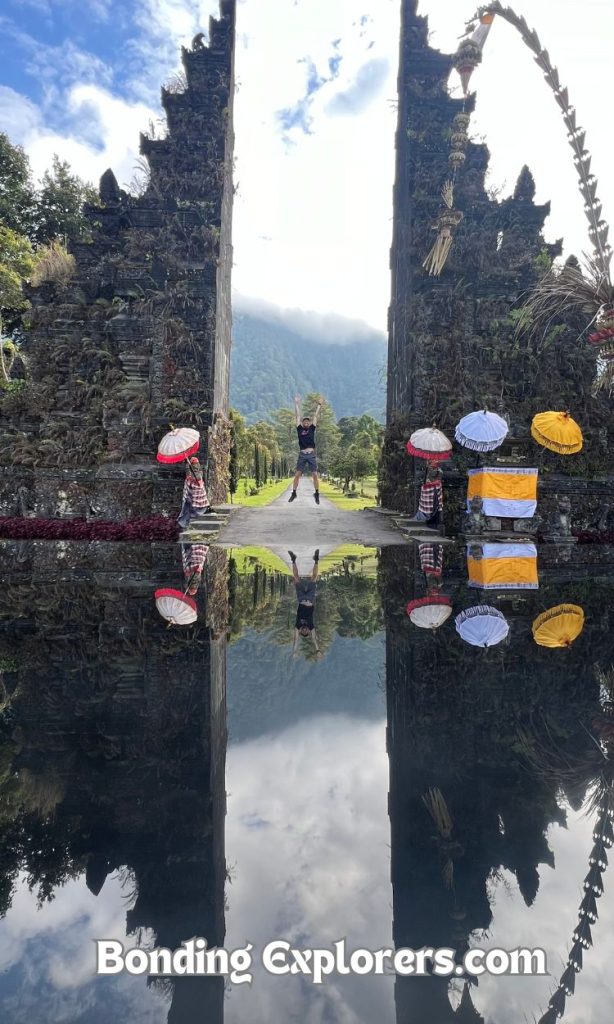
The biggest difference is pacing. You arrive, wait briefly, take your photo, and move on. There’s far less buildup and far less pressure, which makes it easier to enjoy. Handara also fits naturally into a day around Bedugul, making it a flexible stop rather than a full commitment.
Banyumala Twin Waterfall
If you’d rather trade queues for nature, Banyumala Twin Waterfall is a refreshing alternative. The short walk down already feels like a reset, and once you reach the waterfall, there’s space to swim, relax, and just be present.

This is one of those places where kids can move freely and adults can slow down. No rotations, no waiting for a turn, just water, greenery, and time.
If you’re already making the trip to Lempuyang Temple, adding a nearby water palace is an easy way to round out the day and shift the pace after the waiting and intensity of the Gate of Heaven.
Tirta Gangga Water Palace
Tirta Gangga Water Palace is the closest and easiest add-on. It’s calm, green, and visually very different from Lempuyang. Instead of queues, you wander through pools, fountains, and stepping stones, which works especially well after a long morning.
We like Tirta Gangga because it feels unhurried. Kids can move, explore, and engage, while adults get a break from standing and waiting. It’s an easy win after Lempuyang.
Ulun Danu Beratan Temple
Ulun Danu Beratan Temple is one of the few places in Bali where you can enjoy culture, nature, and scenery in under 90 minutes without dealing with large crowds or long walks. It’s a beautiful temple sitting on a lake with views of the mountains.
FAQs About Visiting The Gate of Heaven Bali
How many steps are there at Lempuyang Temple?
If you’re only visiting the Gate of Heaven, there are very few steps and no strenuous walking involved. It’s a quick steep climb to the gate of heaven, and even that can be done by scooter for a small fee. The thousands of steps people often mention apply to the upper temples, which most visitors don’t attempt.
Do you need to book the Gate of Heaven photo in advance?
No booking is required. Tickets for the Gate of Heaven photo are purchased on arrival. You get a ticket once you enter the premise after paying and you will receive your number. You simply join the queue and wait your turn.
Is the Gate of Heaven photo real?
The gate is real, but the famous reflection is created using a mirror held under the camera lens. There is no water beneath the gate. Knowing this beforehand helps avoid disappointment.
How long do you actually get for photos?
Around 1 minute. You’ll usually get a few quick shots before being asked to move on. The experience is efficient but brief.
Is Lempuyang Temple safe for kids?
Yes. The area is well-organized, and staff manage crowds calmly. there is enough space for kids to sit in the shade as well.
Can you visit Lempuyang Temple without taking the Gate of Heaven photo?
Absolutely. You can walk around the temple grounds, take pictures of many beautiful sites and views from above and the actual temple, see the gate, and leave without joining the queue. For some people, that’s the most enjoyable option, and we have done it as well the first time we saw the queue. There are lots of beautiful spots to take pictures that don’t force you to join the massive line.
What to pack for the temple with kids?
Bring some sun cream, games, a cap, and electronics so they have things to do while waiting for the Insta shot. Here’s a detailed guide on what to pack for kids in Bali

Final Thoughts: Our Honest Take on Lempuyang Temple and the Gate of Heaven
Lempuyang Temple and the Gate of Heaven are not inherently overrated or magical. They’re what you make of them. When approached as a photo mission, the experience often feels stressful and underwhelming. When approached with curiosity, patience, and realistic expectations, it can feel meaningful in its own way.
For us, understanding the history, accepting the waiting, and letting go of the need for a perfect photo changed everything. The Gate of Heaven became a small part of a bigger experience rather than the sole reason for being there.
If you’re already exploring East Bali, Lempuyang Temple can be worth the time. If you’re crossing the island just for the photo, it’s worth asking whether that moment matches the effort involved. Bali offers countless places with beauty, calm, and connection. The Gate of Heaven is just one of them.
Approach it with the right mindset, and you’ll leave with more than just a photo. Let me know what you think and if you are going to the Lempuyang Temple as part of your Bali Itinerary.
🇮🇩 Bali Travel Essentials
Planning Bali doesn’t need to be complicated. These are the tools we actually use to travel Bali smoothly, whether we’re moving fast or traveling as a family.
📶 Mobile Data in Bali (Do This First)
Having data as soon as you land makes everything easier – maps, taxis, bookings.
We use Airalo eSIM in Bali because it connects instantly and works reliably across the island.
🚕 Airport Transfers (Arrive Stress-Free)
After a long flight, pre-booked transport saves time and energy.
We recommend Viator for Bali airport transfers. Drivers track your flight, and pricing is fixed, and you skip the horrible experience at the airport with all the “taxi drivers.”
🏨 Where to Book Stays
For hotels, villas, and guesthouses, we use Booking.com. For budget stays or social travel, Hostelworld works well and also offers private rooms.
🗺️ Tours & Experiences
To avoid low-quality tours or last-minute stress, we book through platforms with strong reviews. Klook and Viator are our go-to choices for Bali.
🛵 Getting Around Bali
Scooters are flexible, but only if you’re confident riding. If not, Grab and Gojek are safe and affordable in most areas. The simplest and greatest choice for a full day of exploring is to hire a 5⭐ private driver. For scooter rentals, we recommend and use BikAgo.
💧 Drinking Water and Food in Bali
Tap water isn’t safe to drink. Stick to bottled or filtered water and avoid ice in small local spots. When eating at local warungs, always check if there are more people eating!
💰 Money & Payments
The local currency is the Indonesian Rupiah (IDR). We withdraw cash locally and always decline the ATM conversion. The Revolut debit card works very well in Bali.
🎫 Visa Info (Quick Check)
Most travelers can get a Visa on Arrival, valid for 30 days and extendable once. Rules change, so always double-check before flying.
👨👧 Bali with Kids & Teens (Quick Tips)
Bali works very well for families and teens when paced right. Check here for my detailed guide for traveling with kids & teens.
🎒 What to Pack (Brief)
Light clothing, reef-safe sunscreen, walking shoes, and a rain jacket in the wet season. We’ve shared our full Bali packing list here.
Other recommended Guides


Let me know your thoughts, and share this with your friend or partner that you want to go on a trip with.
⭐ Share this post. ⭐⭐
